Condominium Defined
Condominium is Latin in origin and means co-ownership. A condominium is defined as "an estate in real property, consisting of an undivided interest in common in a portion of real property coupled with a separate interest called a unit." (Civ. Code § 4125) Unless the declaration or condominium plan provide otherwise, if walls, floors, or ceilings are designated as boundaries of a separate interest, the interior surfaces of the perimeter walls, floors, ceilings, windows, doors, and outlets located within the separate interest are part of the separate interest and any other portions of the walls, floors, or ceilings are part of the common area. (Civ. Code § 4185(b)) Unlike stock cooperatives, condominium owners hold title to their units.
Condo Unit Defined
A condominium "unit" is typically a cube of air bounded by unfinished floors, ceilings, and perimeter walls. The boundaries of units and common areas are described in a condominium plan.
Membership. Owners automatically become members of a nonprofit corporation or an unincorporated association created to manage the development. Any conveyance, whether voluntary or involuntary, of an owner's interest in the unit automatically includes the owner's membership in the association. (Civ. Code § 4630)
Governance. Associations are governed by a board of directors elected by the membership. (Corp. Code § 7210)
Forms of Condominium Developments
Condominium developments are typically in one of four forms: (i) townhouse, (ii) stacked lowrise, (iii) stacked midrise, and (iv) stacked highrise. A fifth form, the airspace subdivision, is used for mobilehome parks. A condominium unit can also be filled with a combination of air and water, becoming a "dockominium."
1. Townhouse Condominiums
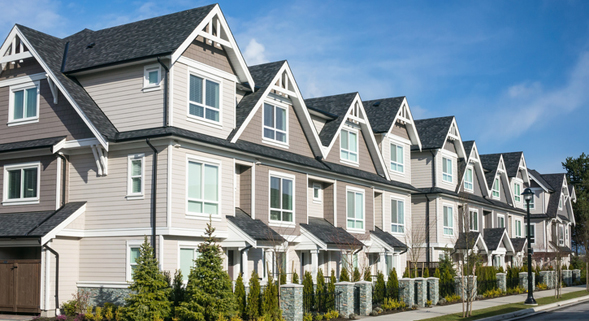
Townhouse condominiums, also called patio homes, are side-by-side units that share a party wall. They do not have units above or below them. The number of side-by-side units can range from two to a dozen or more. Townhouses are typically 2 or 3-story structures. The townhouse and the lot on which it rests are owned in common by all owners. The airspace inside the townhouse is owned separately by each unit owner. Parking is either in garages or carports. Management is usually offsite and budgets depend on the amenities and number of units.
2. Lowrise Condominiums
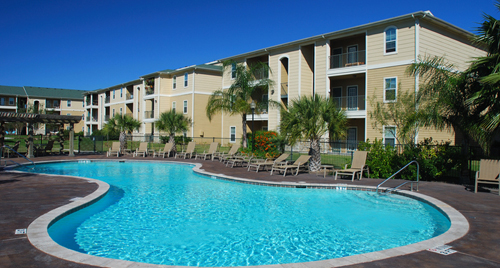
These are stacked condominiums, either two or three stories tall, with or without elevators. Parking is either exposed lots or carports. For most, management is offsite. If the condominium complex is large with significant amenities, management could be onsite. Budgets will vary with the size of the complex and the number of amenities.
3. Midrise Condominiums
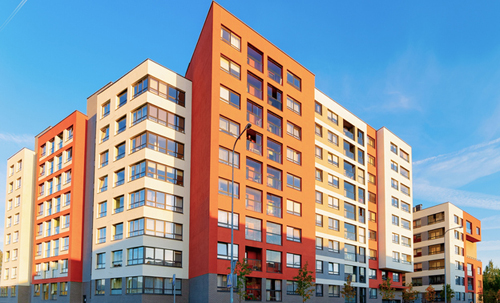
Midrise condominium structures are four to eight stories tall with elevators. Parking is normally underground. Budgets are moderate, and management is often offsite but could be onsite if the complex is large enough.
4. Highrise Condominiums
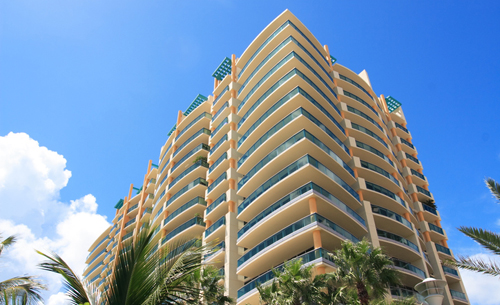
Highrise condominium structures are nine + stories tall, with some as tall as 60 stories. Parking is underground. These are typically luxury buildings with large budgets and large staffs, including onsite management, housekeeping, maintenance, security personnel, and valet.
5. Airspace Lots
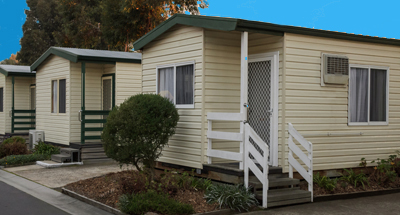
Another form of development is the airspace subdivision. This type of subdivision may refer to the lots as "airspace condominiums," "airspace lots," or "condominium lots." In an airspace subdivision, the "condominium lot" is a cube of air defined by a survey and legal description of the lot. Everything within the survey stakes is the condominium lot or subdivision condominium. Accordingly, all structures and improvements within the boundaries of the lot are improvements to the condominium, which are owned by the buyer of the condominium. It is not uncommon to see this type of ownership used for mobilehome developments, especially conversions from rental parks. Mobilehome condominiums where cubes of air with surveyed boundaries sit on lots in which owners park their mobilehomes. Mobilehome park conversions are allowed under California Government Code § 66427.5 and can be structured as condominiums, stock cooperatives, or planned developments.
6. Loft Condominiums
Loft condominiums are also known as live/work projects, are often located in areas of cities that are transitioning from industrial warehouse districts to mixed-use residential. They offer housing to people who want to live where they work. Loft condominiums are built into the industrial buildings. "Loft-style" may also refer to developments in which a street-level business occupies the first floor and the residential loft the second.
7. Hotel Condominiums
These projects blend hotels and condos into a single package. Normally, at least some portion of the condo units are owned by private unit owners, but are used by the hotel for hotel guests. The "common area," owned by the condominium owners, is managed by the hotel operator. Condo hotels are typically sold as second or third homes, not primary residences, so that units become part of the hotel's inventory of rentable units. The sale of hotel condominiums and subsequent rental management agreements do not constitute securities transactions. (Salameh v. Tarsadia Hotel, 726 F.3d 1124 (9th Cir. Aug. 13, 2013)
|
|
Condominium |
Hotel Condos |
Timeshare |
| What you get |
Often two and three bedrooms, and always with a kitchen |
A hotel room, from standard to suite, often without kitchen facilities |
Ranges from studios to penthouses, usually with kitchenettes |
| Length of Stay |
May occupy the unit anytime, 365 days a year |
Generally, the length of stay is limited, typically one week to three months |
Entitled to occupy during the share purchase done or two weeks, for example |
| Ownership of a Unit |
Whole |
Whole |
Shared |
| Annual Fees |
wide variance |
$350 to $2,300 (usually includes utilities) |
$450 to $750
|
| Renters |
Rentals may be restricted by the homeowner's association CC&Rs |
Owners usually must make the unit available for rent when not occupying it by joining the developer's sponsored rental program, hiring an independent rental agent or renting the unit themselves |
Varies by management company |
8. Dockominiums
A dockominium is a marina-based version of a condominium. It consists of an undivided interest in the common elements of the marina coupled with a separate interest in a boat slip. The boat slip may consist of a cube of water extending to the land under the water, plus the air above the water where the boat would be parked. Condominium boat slips can be bought and sold the same as condominiums. Members pay monthly fees that go to the maintenance and administration of the marina.

9. Horse Stalls
Horse stall condominiums were proposed as early as 1988 by the Los Angeles Equestrian Center in Griffith Park. With 1,100 horse stalls, the plan was for people to buy stalls for $30,000 and then pay a $205 monthly maintenance fee.

ASSISTANCE: Associations needing legal assistance can contact us. To stay current with community association issues, subscribe to the Davis-Stirling Newsletter.