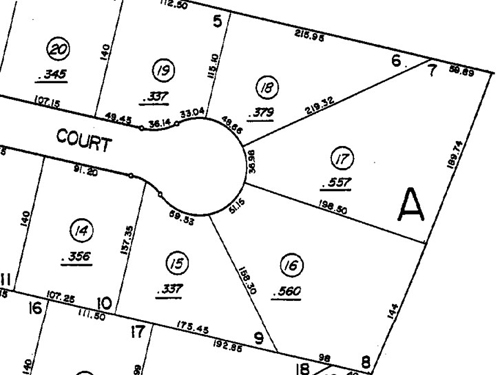
 Planned Development Defined
A planned development (PD) is a category of common-interest developments under the Davis-Stirling Act. Some governing documents use the term "planned unit development" (PUD) and "planned residential development" (PRD). The Act defines “Planned development” as a real property development, having either or both of the following features:
(a) Common area that is owned either by an association or in common by the owners of the separate interests who possess appurtenant rights to the beneficial use and enjoyment of the common area. and (b) Common area and an association that maintains the common area with the power to levy assessments that may become a lien upon the separate interests... (Civ. Code § 4175) [Unless the CC&Rs otherwise provide, the common area is owned by the owners as tenants in common, in equal shares. (Civ. Code § 4500)]
In a planned development, the separate interest is often designated by a number, with common area lots designated as lettered lots.
Common Areas
In a planned development, members own a lot (described on a tract map) and some or all improvements on the lot. Common areas often include amenities such as private streets, greenbelts/parks, clubhouses, swimming pools, golf courses, equestrian facilities, tennis courts, lakes, hiking trails, front gate facilities, and perimeter fencing.
Reciprocal Easements. Common area may also consist of mutual or reciprocal easement rights appurtenant to the separate interests. (Civ. Code § 4095(b)) An easement is an interest in the land of another, created by grant or prescription, which entitles the owner of the easement to a limited use or enjoyment of the other's land.
See Committee to Save Beverly Highlands v. Beverly Highlands for a discussion of common interest developments.
Forms of Development
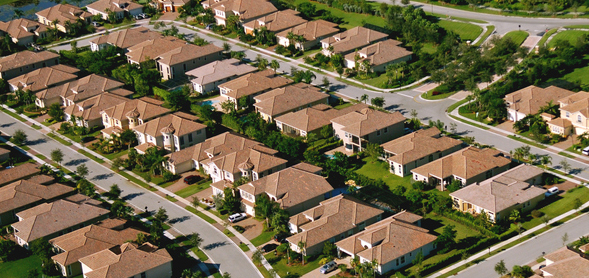
1. Free-Standing Homes
The first form of construction is free-standing homes on lots.
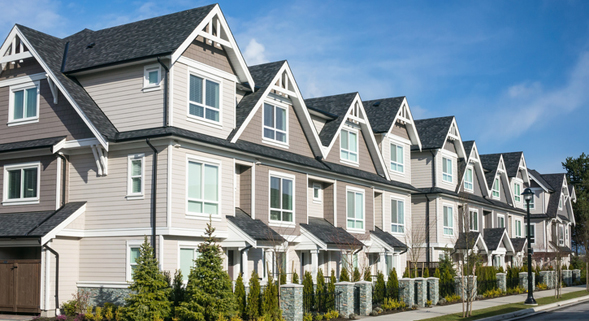
2. Townhouses
The second form of construction for planned developments is townhouses, where two or more are separated by party walls. With townhouse construction, owners might own a traditional-looking lot with fenced front and back yards, or they may own a "footprint" lot, i.e., the dirt upon which the structure sits and nothing more.
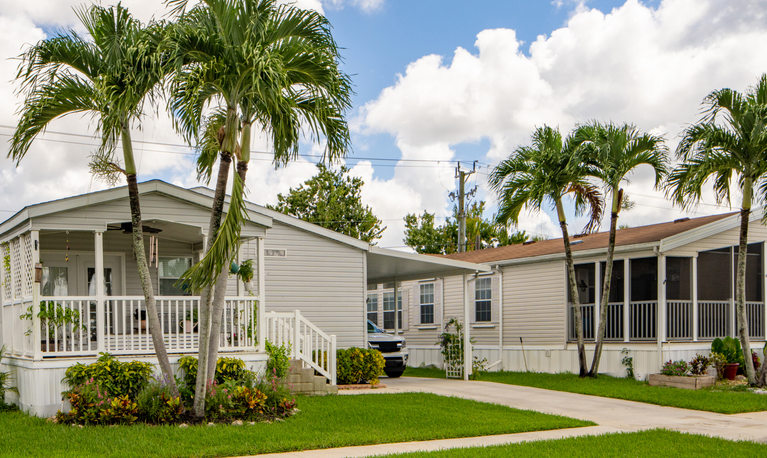
3. Mobilehome Parks
Mobilehome parks can be structures as planned developments. As with single-family homes, the lot upon which the mobilehome is parked is owned by the homeowner, not by the park. The amenities and streets (if gated) are owned in common by the members.
Maintenance Requirements
Maintenance responsibilities in planned developments can vary considerably. See Planned Development Maintenance Responsibilities.
Annexations. For more information, see Annexations.
ASSISTANCE: Associations needing legal assistance can contact us. To stay current with community association issues, subscribe to the Davis-Stirling Newsletter.