Clean, Gray, and Black Water
 There are three categories of water when it comes to building maintenance: clean, gray, and black:
- Clean water is drinkable water from your faucet and shower. Clean water lines are under pressure, which means a flood can quickly cause significant damage. Failure to clean up the water and dry out wall cavities can lead to mold, which is expensive to remediate.
- Gray water is wastewater from sinks, washing machines, and bathtubs. It contains soap and low-level contaminants. If they become clogged, gray water floods can occur. For example, people can put potato peels, pasta, rice, etc., into garbage disposals, clogging the lines.
- Black water (also called sewage) is toilet wastewater that contains fecal matter and urine. It carries high levels of bacteria that can cause diseases such as hepatitis and dysentery. Backups can occur when items are flushed down toilets, such as diapers and sanitary pads. If the clog is in a line at the bottom of a stack, the amount of sewage flowing into a unit from other units higher up in the stack can be significant.
Clean-Up. Whenever floods occur in condominiums, they invariably involve common areas and other units. Associations are obligated by the Davis-Stirling Act and their CC&Rs to maintain, repair, and replace the common areas. That means associations must move quickly to remove all water from carpets, floors, and walls and clean any contaminated areas if gray or black water is involved.
Recommendation: Whenever floods occur, immediately fix the leak and clean everything. Simultaneously notify insurance of the loss. Then, determine fault and, if appropriate, levy a reimbursement assessment to cover the insurance deductible (assuming you have a deductible policy).
Responsibility for Sewer Line Maintenance
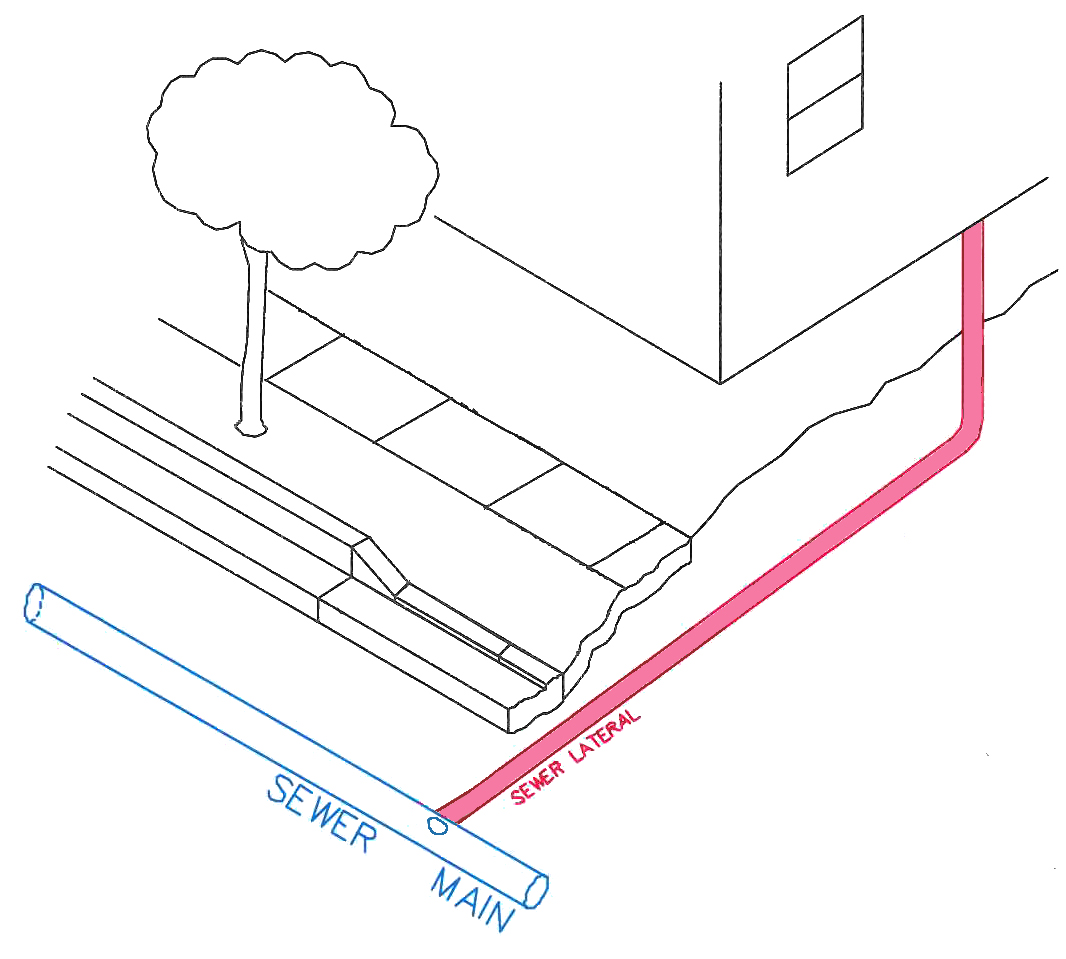 In addition to a duty to investigate, associations may have a duty to maintain and repair that may not be clearly defined in the governing documents.
Line Replaced. Patrick Jennison had a leaky sewer pipe two feet beneath his condominium's concrete slab that vented sewage into his unit. The Dover Village Association cut through Jennison's floor, jackhammered the concrete slab, and replaced 50 feet of sewer pipe that connected his condo to the main sewer line.
Owner Billed. Because the lateral sewer line exclusively serviced Jennison's condo, the association deemed it exclusive use common area. As provided for in the Davis-Stirling Act, HOAs are responsible for repairs to common areas, while homeowners are responsible for their units and exclusive use common areas appurtenant to their units. (Civ. Code § 4775(a)) Accordingly, the association billed Jennison for the $15,000 it spent repairing the line. Jennison refused to pay, and the Association sued.
Court Review. The court examined Civil Code § 4775(a) (Old: Civil Code § 1364(a)), which states that owners are responsible for exclusive use common areas "unless otherwise provided in the declaration." Because the statute defers to an association's CC&Rs, the court turned to the Dover Village governing documents. It found that the CC&Rs were silent on maintenance duties for exclusive-use sewer lines.
The CC&Rs did, however, specifically designate patios and garages as exclusive use common areas to be maintained by owners. By expressly assigning maintenance duties for these exclusive use areas, the court concluded that all other exclusive use areas were the responsibility of the Association. Accordingly, the court found for Jennison and against Dover Village. (Dover Village v. Jennison)
Recommendation: Most associations have outdated governing documents regarding maintenance duties. To avoid costly litigation, associations should update their documents to clearly define maintenance responsibilities. There are three options:
- Some documents make the HOA responsible for all maintenance. This results in higher monthly assessments, spreads the cost across all owners, and provides a reserve to cover costly repairs.
- Other associations prefer to keep dues as low as possible and make individual owners responsible for their own maintenance as if they lived in a single-family home.
- Some governing documents make the owner responsible for maintenance of lateral lines, but make the association responsible for repair and replacement of the line.
Each is a legitimate policy, but the one selected must be clearly defined in the CC&Rs.
San Francisco East Bay Sewer Laterals
I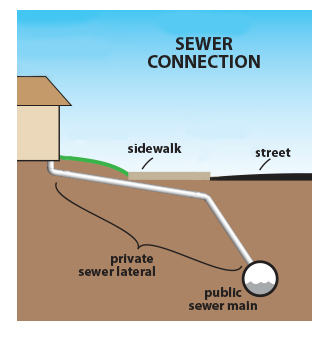 n response to an EPA and California Regional Water Quality Control Board order, East Bay Municipal Utility District (EBMUD) enacted an EBMUD Consolidated Regional Private Sewer Lateral Ordinance intended to fix old, cracked sanitary sewer pipes. Under this ordinance, associations must have PSLs for which they are responsible inspected, repaired, or replaced if necessary, and obtain a compliance certificate from EBMUD. Property owners must go through the inspection, repair, and compliance process for PSLs, which they are responsible for upon the following triggering events: buying or selling a property; building or remodeling in excess of $100,000; or changing the size of the water meter.
Affected areas: Alameda, Albany, Emeryville, Oakland, Piedmont, Kensington, El Cerrito, and Richmond Annex. The City of Berkeley has its own program, and information can be found here: City of Berkeley Compliance Guide.
What is a private sewer lateral (PSL): A PSL is a pipe or accessory object that carries sewage from the structure to the sewer main.
Exemptions: If the PSL is less than 10 years old from the date of final permit sign-off, was fully replaced before the program's effective dates (Alameda – 1/1/15; Albany – 1/1/15; Emeryville and Piedmont – 8/22/11; Oakland – 1/16/12; El Cerrito, Kensington, and Richmond Annex – 10/17/11), and the permitting agency verifies the replacement. This link provides information to obtain an exemption: Exemption Guidelines.
Steps: All associations that were formed before May 24, 2019, were to have submitted a Statement of Responsibility by 11/20/19. Those formed after May 24, 2019, must submit the Statement of Responsibility within 180 days of formation.
For associations responsible for more than 1,000 feet of PSLs, a Condition Assessment Plan must have been completed by 7/12/16 for those formed before that date, or no later than 11/20/19 or 180 days after formation (whichever is later) for those formed after 7/12/16. These associations will also need to complete a Corrective Action Work Plan by no later than 7/12/21 for those formed before 7/12/16, or 7/12/21 or 24 months after formation (whichever is later) for those formed after 7/12/16.
All associations will need to hire a plumbing contractor to inspect their PSLs, complete any necessary repairs or replacements, schedule an EBMUD verification test, and obtain a compliance certificate. Those associations responsible for less than 1,000 feet of PSLs must complete this process by 7/12/21 (those formed before 7/12/19) or within 24 months of formation (those formed after 7/12/19). Associations responsible for more than 1,000 feet of PSLs must complete this process by 7/12/26 (those formed before 7/12/19) or no later than seven years after the parcel group was acquired (those formed after 7/12/19). The deadlines for those responsible for more than 1,000 feet of PSLs can request an extension if they are responsible for more than 5,000 feet of PSLs or if 50% or more of the PSLs need replacement.
ASSISTANCE: Associations needing legal assistance can contact us. To stay current with community association issues, subscribe to the Davis-Stirling Newsletter.
