 Fire Safety Escrow Disclosures
To help reduce the risk of wildfire destruction, beginning July 1, 2021, sellers of property in high- or very-high fire hazard severity zones must disclose to buyers their home's vulnerability to flying embers. (Civ. Code § 1102.19) This includes items such as:
- Eave, soffit, and roof ventilations that are not flame- and ember-resistant;
- Roof coverings made of untreated wood shingles or shakes;
- Combustible landscaping or other materials within five feet of the home;
- Single-pane or nontempered glass windows;
- Loose or missing bird-stopping or roof flashing;
- >Rain gutters without noncombustible gutter covers.
In addition, the seller must obtain a certificate that their property complies with Section 4291 of the Public Resources Code or local vegetation management ordinances. The default brush clearance requirement is 100 feet on each side and in front of and behind the structure. See the sample Fire Inspection Form.
Condominiums. For single-family homes in planned developments, the owner must inspect and make disclosures. What about condominiums where the structure is owned in common? The statute makes no exception for condos. It states, "the seller of any real property" shall make disclosures. It means boards of directors of condominium and townhome associations need to have their properties inspected and then circulate a report to all members so owners can make appropriate disclosures to buyers.
Fire Map. More than 2,000,000 California households (almost one in four) are located in high- to very-high fire hazard zones. To find out if your property is affected, visit the CalFire website and enter your address. Information on fire hardening, including current building standards and minimum annual vegetation management standards to protect homes from wildfires, is available at ReadyForWildfire.org.
Defensible Space
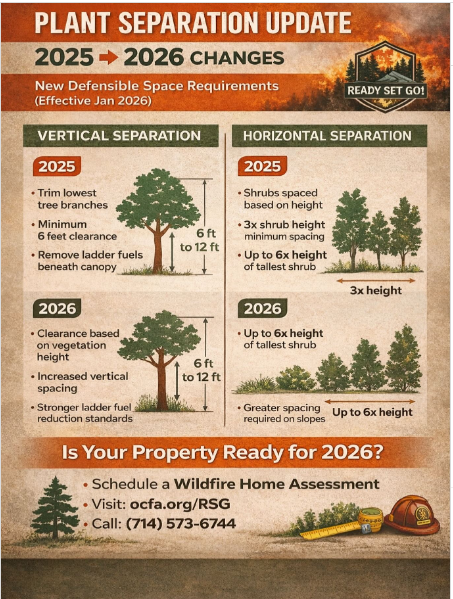 On August 18, 2026, California's Board of Forestry and Fire Protection adopted tough new rules to help protect communities from fires. Homeowners in wildfire-prone areas must limit plants within 5 feet of their house. Local fire departments and state agencies will enforce the new rules through annual home inspections.
Zone 0 (0 to 5 feet from structures)Immediate Safety Zone: The first 1 foot from the base of the home (or out to the edge of the roof eaves, whichever is farther) must be completely free of all vegetation, combustible mulch, wood chips, and bark. Outer Zone 0 (1 to 5 feet): Allow low-growth, well-spaced, and maintained non-woody plants (such as succulents or native low ground cover) if neatly grouped and separated. Attachments: Mitigate or upgrade combustible fencing and storage attached to, or within 5 feet of the structure.
Zone 1 (5 to 30 feet from structures): Remove all dead plants, grass, and weeds. Clear dead leaves and pine needles from the yard, roof, and rain gutters. Trim overhanging tree branches so they stay at least 10 feet away from chimneys. Move wood piles and heavy combustible storage out into Zone 2.
Zone 2 (30 to 100 feet from structures): Cut or mow annual grass down to a maximum height of 4 inches. Create horizontal and vertical spacing between remaining shrubs and trees. Remove fallen leaves, needles, and small twigs (though a shallow layer up to 3 inches deep may be permitted depending on local rules)
Recommendation. Boards and homeowners should request a defensible space inspection to determine whether their properties meet new fire safety requirements. For more information, see Defensible Space Program and Fire Hazard Severity Zones.
Other Seller Escrow Disclosures
See the "Additional Seller Disclosure Obligations."
ASSISTANCE: Associations needing legal assistance can contact us. To stay current with community association issues, subscribe to the Davis-Stirling Newsletter.