|
BBQ FIRE FEEDBACK
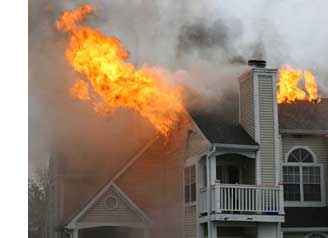 BBQ Fire #1. It is unlikely that either carrier will deny a fire claim started by a barbecue on a balcony. Too many people are affected by one owner's actions. But there is a liability exposure for the owner not following rules, or the HOA not enforcing them. -Mike Berg, CIRMS, Labarre Oksnee Insurance BBQ Fire #1. It is unlikely that either carrier will deny a fire claim started by a barbecue on a balcony. Too many people are affected by one owner's actions. But there is a liability exposure for the owner not following rules, or the HOA not enforcing them. -Mike Berg, CIRMS, Labarre Oksnee Insurance
RESPONSE: I agree. It is possible the association may sue the owner for the insurance deductible, and individual owners sue him for their loss of personal property and displacement costs not covered by their own insurance. It is a big loss for everyone involved.
BBQ Fire #2. I don’t foresee an issue on the master policy for fire damage, as fire is a covered loss on property insurance policies per state code. If there is a fire from the BBQ, it is usually an unusual one-off circumstance like the unfortunate situation described. Smart underwriters know that one BBQ fire does not mean that more BBQ fires are more likely, as opposed to a pinhole leak in a plumbing line, where an insurance company’s underwriter can reasonably assume that one claim indicates the same condition is more likely to arise elsewhere in the building. The master carrier does have the right to establish a guideline for renewal, but I’ve not seen coverage issues from BBQ fires. –Brian Kalmenson, CIRMS, Gemini Insurance Brokers
BBQ Fire #3. Los Angeles County has not adopted that section of the code. -Rayman
RESPONSE: LA County, and LA City in particular, are not models of what to do during a wildfire. Both could use better management when it comes to fire prevention.
BBQ Fire #4. At our complex, we have a common area BBQ in the courtyard which is fueled by a natural gas line, which is derived from the pool equipment room. When we switched insurance companies, the insurance inspector notified us that the BBQ had to be relocated at least 10 feet away from the wood structure of the pool equipment room, which we did by extending the natural gas line to a further location. -Kaye D.
RESPONSE: Smart move. It reduces the association's fire-risk.
Fire Insurance. One board member wants to spend $7,000 to have a lawyer redo our CC&Rs. He said the CA Fair Plan (and other insurance companies) require updated CC&Rs to avoid cancellation. CC&Rs from 1972 risk having our insurance canceled. Another board member said that there is no need to revise the CC&Rs to avoid insurance cancellation. Owners are freaked out about the possibility of insurance cancelling us. Who is right? –Marguerite M.
RESPONSE: I am not aware of any requirement that CC&Rs be amended to avoid insurance cancellations. I checked with insurance specialist Mike Berg, and he could not find anything to suggest that insurance carriers are non-renewing policies due to CC&R language.
New Defensible Space Requirements.  On August 18, 2026, California's Board of Forestry and Fire Protection adopted tough new rules to help protect communities from fires. For more information, go to "Fire Safety." To track wildfires, you should download a "Watch Duty" app to your phone. It is a free, emergency alert and interactive mapping application that provides real-time updates on wildfires and major floods. On August 18, 2026, California's Board of Forestry and Fire Protection adopted tough new rules to help protect communities from fires. For more information, go to "Fire Safety." To track wildfires, you should download a "Watch Duty" app to your phone. It is a free, emergency alert and interactive mapping application that provides real-time updates on wildfires and major floods.
Recommendation: 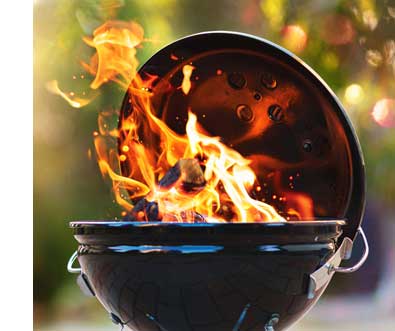 Even if your city has not adopted fire code provisions regarding barbecues on balconies, boards of directors can still add the restriction to their rules and regulations. Electric grills may be a reasonable alternative to open-flame devices. Since the California Fair Plan (or as some call it, the Unfair Plan) is woefully inadequate to cover rebuilding costs, associations should do as much as possible to reduce risk of fire in their community. Even if your city has not adopted fire code provisions regarding barbecues on balconies, boards of directors can still add the restriction to their rules and regulations. Electric grills may be a reasonable alternative to open-flame devices. Since the California Fair Plan (or as some call it, the Unfair Plan) is woefully inadequate to cover rebuilding costs, associations should do as much as possible to reduce risk of fire in their community.
SUPER EL NINO
FORECAST
If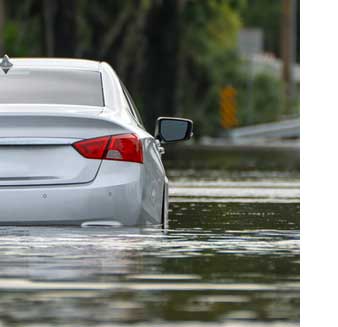 you have been following the news, a record-breaking super El Niño is developing in the Pacific Ocean and is forecast by the National Oceanic and Atmospheric Administration to be the strongest ever on record during the upcoming 2026–2027 winter season. Some forecasters believe that California may get the worst of the powerful storm. you have been following the news, a record-breaking super El Niño is developing in the Pacific Ocean and is forecast by the National Oceanic and Atmospheric Administration to be the strongest ever on record during the upcoming 2026–2027 winter season. Some forecasters believe that California may get the worst of the powerful storm.
In light of the forecasts, associations should immediately have a roofer inspect and patch their roofs and clear their drains. To minimize potential litigation, boards should develop written policies for water intrusion issues. Contact us if you need a policy.
NEW REQUIREMENTS RE
LANDSCAPE TURF IRRIGATION
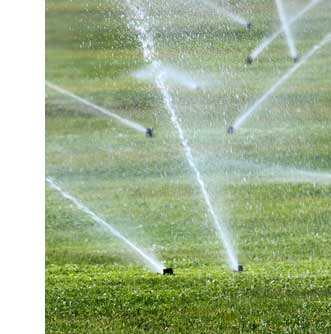 California Assembly Bill 1572 regarding potable water and nonfunctional turf is reshaping irrigation requirements for California's homeowner associations. California Assembly Bill 1572 regarding potable water and nonfunctional turf is reshaping irrigation requirements for California's homeowner associations.
If you missed the webinar put on by Laurie Poole and Gabe Ponce from Precision Landscape Solutions, you can see it here: "Potable Water & Nonfunctional Turf."
HIRING LITIGATION
ATTORNEY
 We are seeking an experienced litigation attorney. If you are interested or know someone who may be a good candidate, please contact Adrian Adams by email or by phone at (800) 464-2817. We are seeking an experienced litigation attorney. If you are interested or know someone who may be a good candidate, please contact Adrian Adams by email or by phone at (800) 464-2817.

|
|
DISCLAIMER. Our newsletter provides commentary, not legal advice. Boards needing legal advice should have an attorney review the facts and law for their particular situation. We serve as corporate counsel to California associations.
|
|
|