Condominium Plans
 Defined. The declarant files a condominium plan and CC&Rs before the construction of a condominium project. It is a multi-sheet 8½ x 11 drawing prepared by a land surveyor, which is attached and recorded as an exhibit to the CC&Rs. If not attached as an exhibit, and a title company cannot locate it, it might be on file with the Department of Real Estate or with the city or county building department. A condominium plan contains a general description of a condominium project with three-dimensional descriptions and boundaries of units and common areas, and exclusive use common areas, such as balconies, parking spaces, and storage spaces.
Notes. The "Notes" section typically describes a unit's boundaries as the unfinished interior surfaces of the perimeter walls, ceilings, and floors. The notes also describe what is not part of a unit, such as bearing walls, columns, foundation slabs, and party walls, which are either contained within a unit or surround it. The plan should also describe exclusive-use common areas that may or may not be connected to a unit, such as parking spaces, balconies, patios, roof decks, and storage areas. See sample condo plan.
Errors. Condominium plans are usually prepared before the building is constructed. Often, the engineer does not revisit the site after the building is completed to compare measurements against the condominium plan, which can result in variations between the condo plan and the actual construction.
Illegible Condo Plans. Old condo plans are sometimes illegible. To address the problem, a surveyor can create a ‘retraced’ condominium plan, which shows the boundaries of the units. It can then be attached to the illegible plan. Deeds would still reference the illegible condo plan’s recording information, but the new plan allows everyone to see the boundaries of their units.
Amending Condo Plans. A condominium plan may be amended or revoked by a recorded instrument acknowledged and signed by all persons who, at the time of amendment or revocation, are required to sign under Section 4290. (Civ. Code § 4295) As required by Civil Code § 4290, the certificate consenting to the recordation of a condominium plan that is required by subdivision (c) of Section 4285 shall be signed and acknowledged by all of the following persons:
- The record owner of the fee title to that property is included in the condominium project.
- In the case of a condominium project that will terminate upon the termination of an estate for years, by all lessors and lessees of the estate for years.
- In the case of a condominium project subject to a life estate, by all life tenants and remainder interests.
- The trustee or the beneficiary of each recorded deed of trust, and the mortgagee of each recorded mortgage encumbering the property.
 Parcel Maps
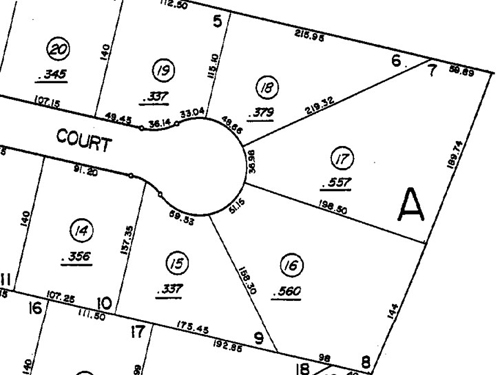
Parcel Map. A "parcel map" is a land division map used for developments of four (4) or fewer residential lots. For commercial, industrial, and agricultural zoned properties, more than four lots can be created by a parcel map.
Tract Map. Subdivision maps, also known as tract maps, are used in planned developments with five or more lots to show the boundaries and locations of each lot and the common areas.
Amending Parcel Maps. Sometimes, planned development parcel maps need to be amended to address property tax issues. The "Subdivision Map Act" (Gov. Code § 66410 et seq.) regulates and controls the design and improvement of subdivisions. Any property divided into two or more parcels is subject to the Map Act.
ASSISTANCE: Associations needing legal assistance can contact us. To stay current with community association issues, subscribe to the Davis-Stirling Newsletter.